Tuesday, May 29, 2012

Black Hills Trip: Devil's Tower National Monument

23 & 24 May 2012 Devil's Tower National Monument, WY ( Park Map)

Entrance Fee: $10/vehicle or National Parks Pass Camping: $12/night, includes bathrooms with flush toilets, electricity, sinks, a dish washing area, and outside water spigots. Hikes: We arrived the evening of the 23rd, and after setting up did an evening hike from the campground. We created a loop trail by hiking the following trail sections: (Southside Trail (.6mi) to Red Beds Trail (.5 mi) to Valley View Trail (.6 mi)). We hiked through out through a prairie dog town on the Southside Trail, then gained elevation up to the Red Beds Trail, which is the outer loop trail around the tower. We had great views of the tower as the moon rose, and then returned down to the campground through the prairie dog town via the Valley View Trail.

After breaking camp we stopped at the Circle of Sacred Smoke Sculpture. This is the newest addition to the park, and acknowledges the importance of the area to the Native Americans in the area.

We then drove up to the visitor center area (2 mi. from campground) and hiked the Tower Trail, which circumnavigates the tower near its base. While only 1.3 miles long, we stopped many times to take pictures and look the various sides of the tower. It is amazing how different it looks from each angle. Additionally, from certain trail points you can see the remnants of the wooden ladder that was originally used to climb Devil's Tower. I can't imagine climbing on narrow wooden rungs crammed in a crack all the way to the top!

When we returned, we explored the visitor center, then headed out on the full Red Beds Trail (3.8 miles). This more meandering trail travels through diverse habitats, from the forests surrounding the tower, to sagebrush, and into the red rock Spearfish formation (also known as the giant racetrack). It was a wonderful hike with a generally rolling character. This trail also allowed us to get out of the more populated areas of the park - I don't think we saw any other people on the trail. We did see deer and plenty of wildflowers. Overall, this hike was one that left me feeling that it had all the perfect elements of a late-morning jaunt in the woods.

Saturday, March 19, 2011

Horsetooth Mountain Park: Super-Moon Hike

Our plan was to hike somewhere high up to watch the super-full moon rise. Despite clouds & smoke (forest fire season has already hit) we had an awesome moon-viewing hike.

Parked: Soderberg trailhead ($6 or year pass)

Service road to sout trail to sawmill to loggers to carey springs trail to service road, and returned down the service road

Time: about 3 hours
Mileage: unknown

Saturday, March 12, 2011

Red Mountain Open Space - Vital Stats

Red Mountain Open space is about 45-60 minutes from Ft. Collins, and is part of the Larimer County's Parks and Open Spaces. It's northern edge is the border between Colorado And Wyoming.

Distance: 7 miles
Time: 4 hours
Water: 1.5 liters
Difficulty: Easy

Route: Sinking Sun Trail (1.2+.4 mi) to Salt Like Trail (1.1 mi.) to Ruby Wash Trail (2.7 mi+.4 mi +.3 mi) to north edge of Bent Rock Trail (.6 miles+.3 miles)

Notes: One trail we crossed was not labeled on the map. Another trail north into the Big Hole Open Space appears unfinished, is not on the map, and is marked with no trespassing signs. The Ruby Wash Trail is mostly in a wash, so I recommend hiking the loop in the direction we did. At its northern end it winds through red cliffs. The Bent Rock Trail also winds through fascinating geological formations.


Carefully fording the river without getting washed away by the raging currents. None of my oxen died either!

Tuesday, February 22, 2011

Monday, January 10, 2011

High Ridge Natural Area

We wound up our trip with a quick visit to a local area where my aunt is a volunteer steward - the High Ridge Natural Area in Palm Beach County. It is sandwiched between houses and the highway, but is still home to many state-threatened gopher tortoises in the rare Florida scrub habitat.


Gopher Tortoise Hole

I was completely enamoured with the slash pines, even though the shorter-needled sand pines are better in this habitat. I think the long, floppy needles make them look like muppet trees! As we wandered through the scrub we saw many trees with male cones, and even found some small female cones preparing for pollination.

Slash Pines aka Muppet Trees!!!!!

Gopher Tortoises

Gopher Tortoise Eating

Thursday, January 6, 2011

Biscayne National Park

Biscayne National Park is primarily an underwater park. My visit to it was limited to a snorkeling trip run by the park sponsored concessionaire, Biscayne National Underwater Park, Inc. While I was a bit wary of them from their website, I was very pleased with the trip as a whole. To start off we had a brief orientation with a park ranger before we left on the boat. We also had a park ranger along as a guide for most of the boat trip out, as we dropped off and picked up the island tour on our way out.

The actual snorkeling area was over a very shallow reef, and we were always close to the boat. While we technically were supposed to have a buddy, I was told that I didn't need to stick with the couple I was supposed to be tripled with, as they were having a lot of problems adjusting to their gear and adjusting their flotation vests. While these vests aren't life jackets, they help you find neutral buoyancy. As we had both the boat captain and a master drive instructor watching us, I felt safe not being glued to a buddy. I did regularly check my bearings in relations to the rest of the group and the boat, and after a bit also learned some of the reef formations to tell where I was.

This was my first experience snorkeling in an actual reef, however I have been scuba diving on a reef once. Since this reef was so close to the surface I saw much of the detail I saw when scuba diving. After I adjusted to bobbing in the waves, and swimming in place in the current, I enjoyed watching fish dart about and the coral move in the currents.

We had about an hour in the water, which was the perfect amount of time for me. I was wearing my long sleeve titanium-lined kayaking rash guard, and was starting to feel a bit chilled and ready to get out right when they called us back in. They do offer wet suit rentals (if they have your size), but my time in the ocean earlier helped me ascertain that I would be fine in the mid-70s water.

On the boat ride back we saw tons of feeding cormorants and some terns. I had plenty of warm clothing for the ride back, but many of the other snorkeling passengers didn't.

Even though I was unsure at first of including this in my trip, I'm very glad I did. It was well worth the time and expense to go snorkeling out on the reef, and thankfully we had good weather conditions for it.

Vital Stats:
Time: 1:30-3:30, with a 1:00 orientation and check in prior to orientation
Cost: $45

Sunday, January 2, 2011

Loxahatchee NWR

? Sulphur Butterfly

White Ibix

Tricolor Heron

Anhinga and Alligator

Alligator

Another Alligator

Little Blue Heron


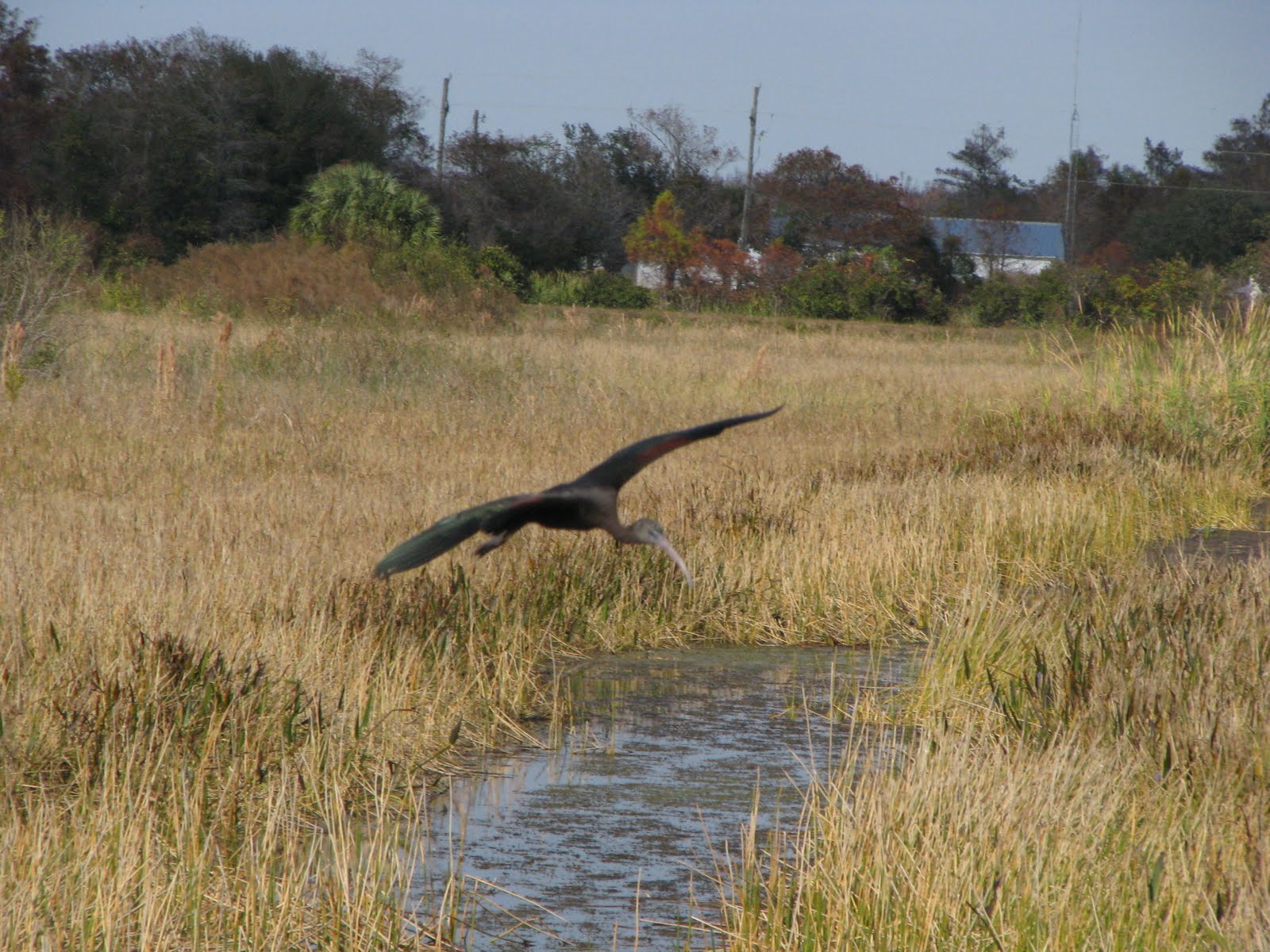
Glossy Ibis


Anhinga


Glossy Ibis


Little Blue Heron


Cypress Swamp

Bald Cypress Knee

Saturday, January 1, 2011

MacArthur Beach State Park

Kayaking in the estuary


Playing in the ocean


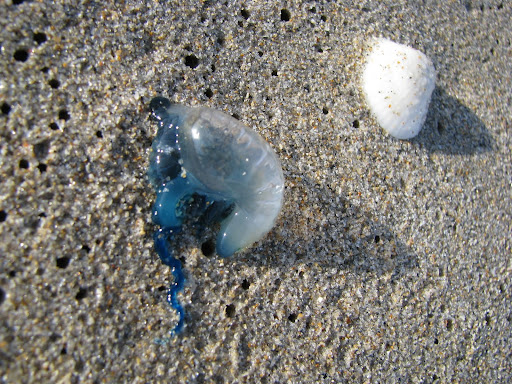
Portuguese man-of-war


Sea Lavender


Poison Wood Tree (think poison ivy in tree form!)


Female Golden Orb or Banana Spider


immature white ibis

Friday, December 31, 2010

New York to Florida via train

As though being baptized into the true start of my journey onto points unknown, we dive deep under the riverbed of the Hudson for 2.5 miles, to emerge into New Jersey and commence 26 hours of heading south on a single train. Here the landscape is less alluring, although we still often follow waterways. The sun sinks slowly on the horizon and my attention drawn into a long-awaited book.

In Washington D.C. We change engines; here the lines switch from electric to diesel.

The accommodations are relatively spacious and much more comfortable than traveling by plane. I can stretch my legs out fully in front of me, and the seats have foot & leg rests to make sleeping while reclined more comfortable. Unfortunately even when they finally dim the cabin lights around 10:30 pm, they are still overly bright and the cabin a bit too warm. Despite these discomforts I sleep decently. Unfortunately the train doesn't quite have the soporific effect that ferries have for me.


I awake a bit before sunrise, and am greeted by a giant glowing orange orb rising just above swampland. The reflection in the standing water surrounded by trees is stunning. Overnight I passed into southern pine ecosystems, which I have read about but never really experienced. They feel simultaneously disconcerting and perfectly right in this warm, humid environment. I associate pines with cold, harsh, dry conditions at altitude, not this warm, moist, lush place.


The journey across Florida takes most of the day, and the vegetation shifts from out of southern pine land and into more tropical vegetation. Water becomes even more prevalent and birds proliferate over the marshes and swamps. I have completed my transition from snow and ice covered temperate forests into sub-tropical warmth.

Thursday, December 30, 2010

Traveling the Hudson by Train


I am transfixed by the landscape rushing past the windows of the train. To my west is the Hudson river at eye level, to the east are edges of towns and phragmities filled wetlands. Conversation floats about me in the car; I only break my enraptured state to occasionally snap a photograph.


The Hudson river is a magical being. An estuary, it pulses with the tides, which influence the river as far north as Troy, 150 miles from its mouth. Where I grew up it is nearly a mile wide; at its widest it is an expansive three and one half miles. I don't remember the exact location of this widest point, but experience the widening of the river as we head south. Ice floes fill the river when I being my journey, but becomes sparser as I travel southwards.


Giant icicles and frozen waterfalls grace the steep rock walls of the ancient mountains that the train tracks are cut into. Now laughable by most standards, these eroded hills once towered higher than the Colorado Rockies. Humans and the train are just one small erosive force on this ancient rock.

At one point two white-tailed deer race along the road next to the train; running from this metal giant that echoes its presence loudly.

As we draw closer to the city I feel the closing in of the giant metropolis of New York. We slowly cross an arm of the river and head underground; even this giant vehicle is dwarfed and sent to ground by the density of humanity here.